
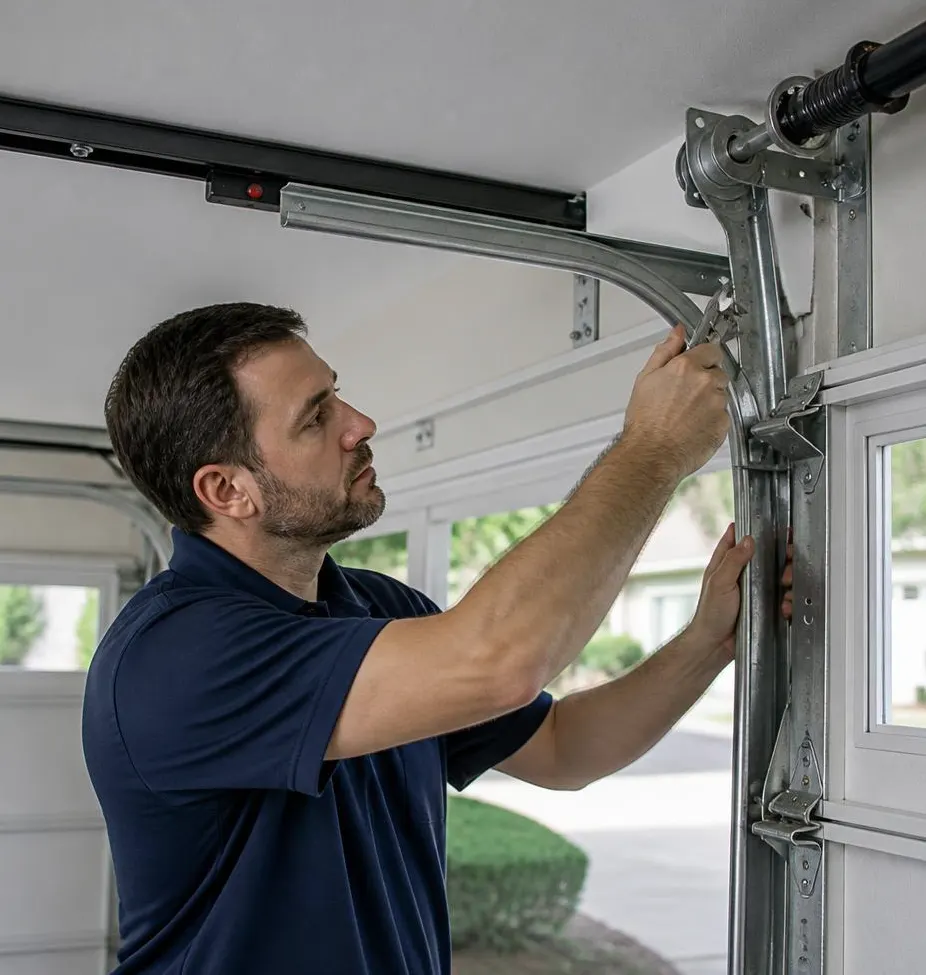
The Moment You Notice Something's Off
It usually starts small. The door hesitates for a half-second before it lifts. There's a new creak, or a dull thunk you don't remember hearing before. Maybe the door looks slightly crooked when it's halfway up, one side higher than the other. Most homeowners catch this moment, shrug it off, and keep opening the door the same way they always have — right up until a spring lets go with a bang loud enough to bring the whole house running.
Springs don't usually fail without warning. They wear down over thousands of open-and-close cycles, and in Central Florida that wear gets accelerated by humidity, salt air drifting inland, and the afternoon downpours that swell wood and stress hardware. Here's how to check your own garage before the spring makes the decision for you.
The Walk-Through Checklist
1. A visible gap in a torsion spring's coils
With the door fully closed, look at the spring mounted horizontally above the door. The coils should sit close together. A gap of a quarter-inch or more between coils means the spring has stretched past its working tension and is no longer providing full lift. If it fails, the door will feel dramatically heavier on that side and may not open at all.
2. Rust or flaking metal on the coils
Humidity and salt-laden air corrode spring steel from the outside in, weakening it long before it looks obviously broken. Light surface rust is cosmetic; flaking, pitting, or rust that comes off on your fingers means the metal's integrity is compromised. A corroded spring can snap under normal tension with no extra warning.
3. The door hangs crooked
Open the door about halfway and look at the top edge. If one side sits higher than the other, one spring (on torsion systems with two) or one extension spring is carrying more load than its partner. This usually means a cable has slipped or a spring has already partially failed. Left alone, the uneven strain can tear the opener's drive gear or bend the track.
4. The opener is working harder than it used to
Listen to the motor. If it groans, slows down mid-cycle, or takes noticeably longer to lift the door than it did a few months ago, the springs are no longer doing their share of the lifting and the opener is compensating. Openers aren't built for that job long-term — continuing to use it this way risks burning out the motor on top of a spring failure.
5. A loud pop or bang, even if the door still moves
Sometimes a spring develops a stress fracture and makes a sharp sound without fully breaking. If you've heard a bang and the door still opens, don't assume you dodged the problem. Disconnect the opener, and with the door closed, see if it moves at all when you lift the emergency release handle. A cracked spring can finish failing on the very next cycle.
6. The door won't hold itself halfway
Disconnect the opener (pull the red release cord) and manually lift the door about halfway. A healthy spring system holds the door roughly in place. If it drifts down on its own or feels like dead weight, the spring tension has dropped below safe operating range.
7. Visible stretch or frayed cable near the spring mounts
On extension spring systems (the ones running along the horizontal tracks rather than above the door), check where the spring connects to the safety cable. Fraying cable strands near this joint are a sign the spring is pulling unevenly, and a snapped cable here can let the spring become a projectile.
Why This Matters More Here Than in Drier Climates
Garage doors in this part of Florida work against more than daily wear. Wind-load-rated doors flex slightly in storms, hurricane season keeps humidity high enough to swell wood panels and seize hinges, and salt air moving inland from the coast speeds up corrosion on any exposed spring or cable. A spring that might last years in a dry climate can wear out faster here, so a visual check every few months — not just when something sounds wrong — is worth the five minutes.
When to Call Winter Springs Garage Door Repair
If you spot gapped coils, rust flaking off in your hand, a crooked door, or that telltale loud pop, stop using the door and call us before it fails completely. Our Garage Door Spring Repair service replaces worn torsion or extension springs with correctly matched, properly tensioned hardware — not a mismatched spare that throws the whole system out of balance. If you're not sure how worn your springs actually are, our Preventive Maintenance & Tune-Up visit checks spring tension, cables, and rollers together so small problems get caught before they turn into a Saturday-morning emergency.
Serving Winter Springs, Oviedo, Longwood, Casselberry, Altamonte Springs, Lake Mary, Sanford, and Geneva, we offer same-day appointments for garage door repair near 32708 and throughout Seminole County. If your springs are showing any of the signs above, call Winter Springs Garage Door Repair today and get it handled before it becomes a bigger job.